Blog · 14 October 2026
Replacing Spreadsheets With a Web App: Where to Start
Spreadsheets are a great place to start a process and a bad place to run a business on. Here is how to tell when it is time to move, and how to do it without disrupting the team.
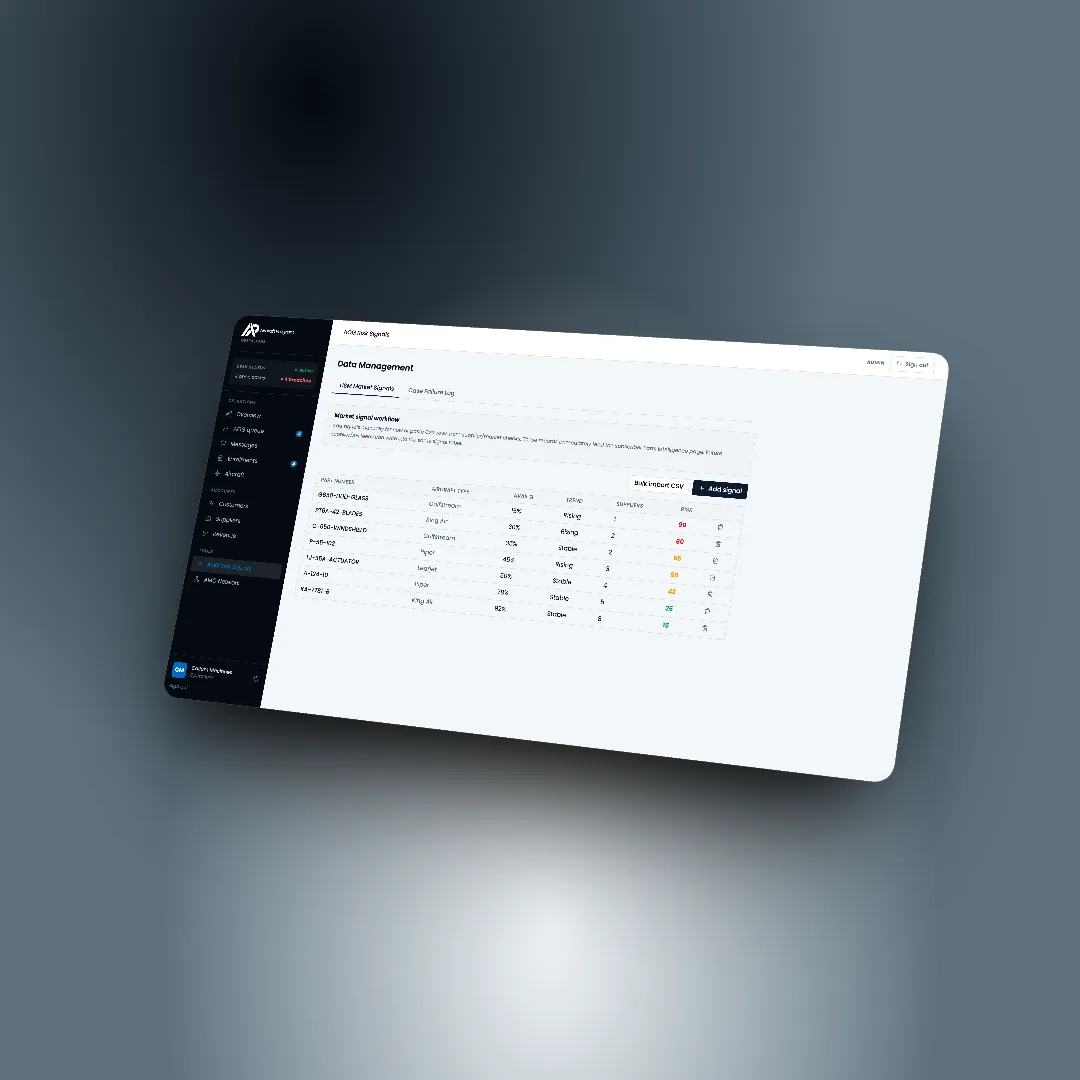
Almost every system we build replaces a spreadsheet. That is not a criticism of spreadsheets. They are flexible, everyone knows how to use them, and they are the fastest way to get a new process going. The trouble starts when the business grows around them.
The signs a spreadsheet has become a system
- Several people edit it at once, and nobody is quite sure which version is current.
- It has rules only one person understands: colour codes, hidden columns, formulas you are afraid to touch.
- Information is copied between sheets or into emails to keep other people updated.
- Customers or partners need some of it, so someone exports and sends a version by hand.
- A mistake would be expensive: a wrong price, a missed deadline, a client seeing data they should not.
When the spreadsheet is central to how you make money and a few of those apply, it has quietly become a system. It just lacks the things a system needs: permissions, history, validation and a single source of truth.
What a web app gives you that a sheet cannot
- One live record. Everyone sees the same data, updated the moment it changes.
- Structure that prevents mistakes. Required fields, sensible options and checks, instead of free text in a cell.
- Access control. Staff, clients and partners see only what they should.
- History. Who changed what, and when.
- Actions, not just data. Alerts when something needs attention, documents generated from the record, payments taken in the same place.
On Aircraft Program, that meant replacing email threads and manual tracking for urgent aircraft parts requests with one platform showing live status to operations, customers and suppliers. On the Moon Jet Group CRM, it meant moving a brokerage off spreadsheets and inboxes onto one shared database.
Where to start
1. Map what the spreadsheet really does. List every tab, who uses it, what decisions it supports and what gets copied out of it. This is often the most valuable hour of the whole project, because it exposes the steps that only exist to work around the spreadsheet.
2. Pick the core record. Most systems revolve around one thing: a job, a listing, a booking, a case. Get that right first and everything else hangs off it.
3. Build the smallest version the team will switch to. Not every tab on day one. Just enough that the team can stop opening the old sheet for their main daily task.
4. Migrate the data properly. Clean it, map it and check it with the people who know it best before switching over. A system people do not trust gets abandoned.
5. Switch, then improve. Retire the spreadsheet on a set date, then add reporting, portals and integrations in order of value once the core is in daily use.
When not to build
If the spreadsheet is used by one person, changes shape every month, or would be just as well served by an existing tool with light configuration, keep it or use that tool. Custom software earns its cost when the process is stable, central to the business and painful to run by hand.
Not sure if you are there yet?
Send us a description of what the spreadsheet does today and who relies on it. We will tell you honestly whether a web app is worth it, and what a sensible first version would include. See how we work or start a conversation.
Need a proper second opinion? If you want clearer advice on your website, SEO, content, Shopify setup, or wider marketing priorities, we can help you work out what needs fixing and what the right next step looks like.
Start a conversation Run a free speed duel on Site Fighter
More writing

Off-the-Shelf CRM vs Custom: When Bespoke Is Worth It
14 Oct 2026

What Goes Into Building a Client Portal
14 Oct 2026

Homepage Mistakes Costing Small Businesses Leads
3 Apr 2026
Work with us
If you have a project that needs doing properly, let's talk.
Ready to build something that refuses to blend in?
Tell us what you’re building, replacing, or trying to fix. We’ll tell you honestly whether it’s the kind of project we’d be good at.